


Headphones have become a part of the life of many children, from online learning and family travel to home entertainment. Audio content is widely available on educational systems, radio programs targeting children, as well as other kids’ educational tech, often used at close range and for extended periods.
The issue that bothers parents and researchers is not the volume, but the influence of early listening habits on future auditory health. Research indicates that repeated exposure to unsafe volume levels can cause auditory fatigue and increase the risk of hearing problems later in life. With greater awareness, more families are seeking systematic approaches to safe listening.
Understanding Safe Listening: More Than Just a Volume Limit
iClever is a worldwide brand that focuses on the designing of audio products, particularly child-oriented. Instead of depending on exaggerated marketing, the brand has been about long term development informed by parental response and on-the-job performance.
Safety, Comfort, and Durability are its core principles. iClever’s goal is not simply to shrink adult headphones, but to create audio tools that truly align with children’s developmental pace and daily environments.
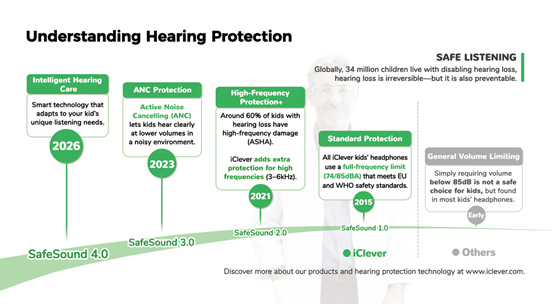
Core Technology: How iClever’s SafeSound System Works
Safe listening cannot rely on a single technical feature. Through its SafeSound™ system iClever integrates volume control, usage duration, and children’s auditory perception into its holistic design.
Drawing on acoustic research and widely accepted industry standards, the system focuses on long-term safety and not on temporary loudness minimization, better matching how children actually use audio for learning, travel, and entertainment.
Wireless Reliability and Everyday Usability in Children’s Audio Devices
iClever designs its products around the widely recognized 85 dB(A) safe volume range for children..
As children grow older, their usage scenarios evolve—from classroom learning and home children’s radio to more complex outdoor environments. Thoughtful volume design helps families strike a balance between flexibility and safety.
Fom Lab Concepts to Real Products
Safe audio does not mean sacrificing the sound quality. Using A-weighted decibel (dB(A)) tuning, sound output closely matches human ear perception.
With attention to cochlear resonance characteristics, audio remains clear and balanced even at lower levels, reducing the need for children to turn up the volume actively.
Media and Expert Recognition
Beyond hearing safety, usability is equally important. Stable Bluetooth 5.3 connectivity minimizes interruptions, while long battery life supports school days, travel, and home use. Some models can provide especially extended playback periods, reducing reliance on frequent charging.
These functional aspects aid audio devices to blend well into family routines.
Rethinking Children’s Audio: A Science-First Direction
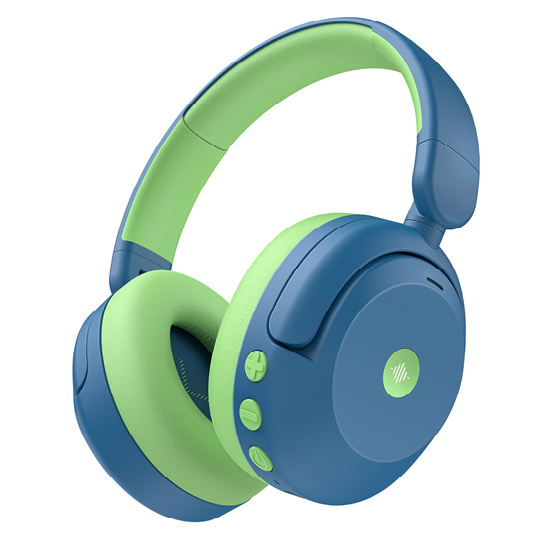
iClever does not impose one solution; instead, but a comprehensive lineup of children’s headphones covering different age groups. BTH20, BTH12, BTH13 and HS19 models reflects the comfort level and usage focus that are adjusted with growth and changes.
When Technology Listens to Biology
- Safe listening is not about restricting use, but about intelligent adaptation to the ear’s sensitivity.
- Evidence-based design is essential for products made for developing ears, ensuring both enjoyment and long-term hearing health.
Comments are closed.